
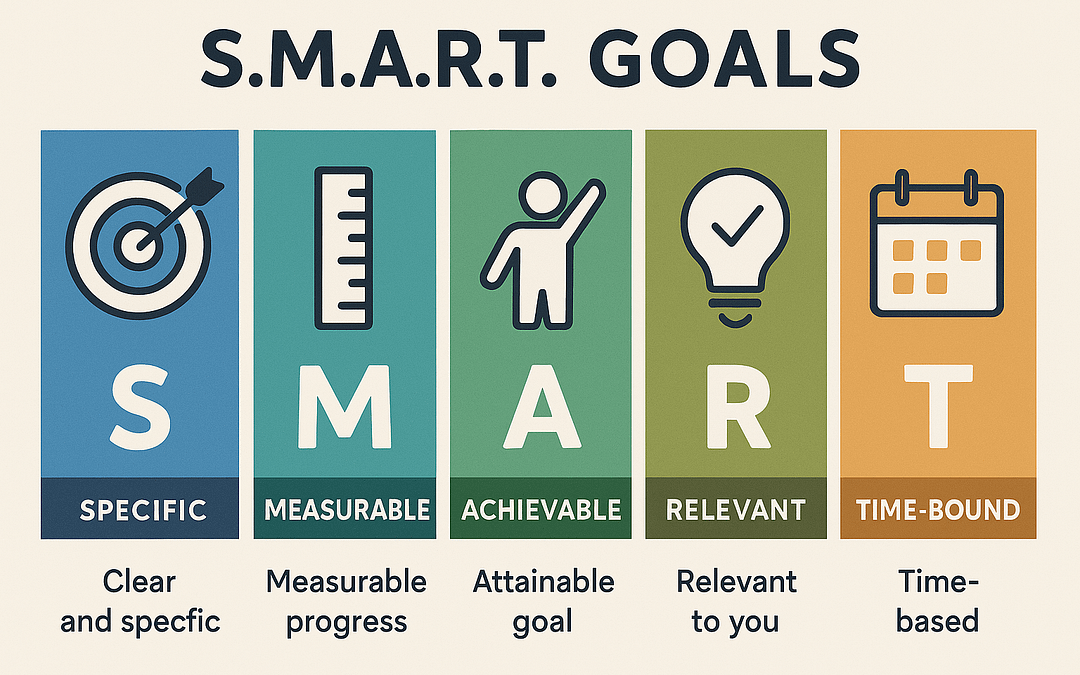
A simple step-by-step guide to setting realistic, actionable goals using the SMART method inside your planner.
Goal setting can feel overwhelming when you don’t have the right structure. I used to write down vague goals like “be healthier” or “grow my business”—but those never gave me direction. That’s why I included a SMART goal section in my undated planner.
The SMART method helps break goals into manageable pieces you can actually follow through on. Here’s how it works:
S – Specific: Make your goal clear and detailed. Instead of “exercise more,” write “go for a 20-minute walk three times a week.”
M – Measurable: Add a way to track progress. Example: “track each walk in my planner’s weekly tasks section.”
A – Achievable: Your goal should challenge you but still be realistic. If you’re new to exercise, walking three times a week is better than promising daily 2-hour gym sessions.
R – Relevant: Make sure your goal ties back to what really matters to you. Why do you want this goal? For better health? More energy?
T – Time-bound: Set a deadline or review date. My planner’s monthly reflection page is perfect for this—I check back at the end of the month to see how I did.
“Goals are dreams with deadlines.” – Diana Scharf
By combining the SMART method with your planner, you turn big dreams into doable steps.
5-Day Planner Challenge: Put Your SMART Goals into Action This Week
From Aspiration to Achievement: A Simple Challenge to Turn Your Dreams into Reality in Just One Week.
Before we dive into the challenge, let’s talk about the right mindset. This isn’t about being perfect. This is about making progress. Pick just one goal to focus on this week—this makes the process less intimidating and more effective. If you miss a day, it’s okay. Just get back on track the next day.
Here’s your five-day plan to put your SMART goals into action:
Day 1: Get Specific & Measurable
Today is about clarity. Choose one goal and write it down in detail. For example, instead of “be healthier,” write down a specific, measurable action like “walk for 15 minutes on Monday, Wednesday, and Friday.” Use your planner’s weekly task list or a blank page to make your goal visible and concrete.
Day 2: Check for Achievability
Look at your goal again. Is it realistic for your current schedule and energy level? If 15 minutes feels like too much, adjust it to 10. Use your planner’s notes section to write down any potential challenges and how you’ll overcome them. For example, “If it’s raining, I’ll do a 15-minute indoor cardio workout instead.”
Day 3: Connect to Your ‘Why’ (Relevance)
Why does this goal matter to you? Is it to have more energy for your kids, to feel better in your clothes, or to clear your mind? Write down your reason and use a highlighter to mark both the goal and your “why.” This is your motivation and will help you stay on track when you’d rather skip a day.
Day 4: Set the Time-Bound Deadline
Your deadline for this challenge is this Sunday. Mark it as “Review Day” in your planner. Circle the end date on your monthly calendar view to visualize the time frame. You can also set a simple reminder on your phone to check your planner on Sunday afternoon.
Day 5: The Action Plan
This is the most important day. Map out the specific actions you’ll take to achieve your goal. If your goal is to walk on Monday, Wednesday, and Friday, write “Walk 15 mins” in your weekly planner for each of those days. Treat it like a scheduled appointment. This helps you prioritize the goal and makes you more likely to follow through.
If you want a planner that guides you through this entire process, my undated planner is available now on my website. It’s designed to help you turn your biggest dreams into daily actions.
Don’t forget to sign up for my newsletter to get 10% off your first order!